Tag: Featured

  • Grasping the Dash

    Grasping the Dash

    Today, I’d like to focus on “grasping the dash,” recognizing that something eternal is at stake in each event, in every moment of our lives. Genealogists frequently talk about the “dash,” all that “stuff” that happens between a date of birth and date of death.

    To start, a touch of history drawn from a book titled “Our Father Abraham: Jewish Roots of the Christian Faith” by Marvin Wilson; “the Hebrews did not hold to a circular concept of history tied closely to the cycles of nature.” What does that really mean? In my life, I’ve found myself at times falling into a mindless routine tied to nothing more than the clock and the calendar. I think that’s the point Mr. Wilson is trying to make.

    “Hebrew history was not a monotonous, purposeless, and eternal cycle of happenings.” The Hebrews didn’t “view life as a race toward death in which one desperately seeks to escape from the clutches of time.  Rather, in sharp distinction, the Hebrew view of time and history was essentially linear, durative, and progressive. In short, it was going somewhere; it was en route to a goal, a glorious climax at the end of this age.” Events in life mattered then as events in our lives should matter now. They are leading to a day when our world will be transformed as all evil is removed from the earth and righteousness prevails. Our Lord will then reign as King over the whole earth.

    In that context, I’ve looked over my life to date and identified 10 nuggets of wisdom, things I’ve learned both as a father and as a son.

    10. What you want to do in any given moment isn’t always the best thing for you to do; for example, I initially wanted to fly jets for the Air Force but ended up on ships in the Navy. My parents worked hard all their lives and didn’t always get to do the things they wanted to do. They did, however, do what was needed and were there for people when needed. They routinely worked hard, did a good job at whatever life threw their way and taught me that it’s far better to do your best, regardless of the circumstance, than to feel sorry for yourself or your consequences. They we’re true examples of guidance in Alma 37:34, “to never be weary of good works…”

    9. I learned that one of the most valuable traits as a leader or team member is patience. Whether at home, in the workplace, or at Church, everyone has something to contribute and it’s our responsibility to know the people we work with and provide opportunities for each to contribute. We have a duty to help those around us feel and actually be successful in this endeavor called life. We cannot force people into a box of compliance or simply disregard them as irrelevant. By no means can we take away their agency or personal choice but we should instead provide worthwhile opportunities and encouragement to others as we feel inspired to do so. Persuasion, patience, long-suffering; these take courage. In today’s world it’s so much easier to do things yourself or force your will on others rather than risk accepting responsibility for someone else’s actions but, realistically, you may find things rather unrewarding, unfulfilling and lonely if you seek them out alone.

    8. Fatherhood itself really has little to do with biology. As a child, I was the product of a series of divorces and remarriages. Easy to endure, no, but not insurmountable. The Lord recognizes that throughout our lives we will each have to deal with challenges that result from the decisions of others. He knows this and will support us as we endure and seek His help. I’ve served with men and women throughout my life, inside and outside both the Church and the military, to whom I look as “parents” in a sense. They’ve been there for me when I’ve needed an assist. I’ve seen goodness sent from our Father in Heaven through my fellow man and feel I’ve been blessed in being able to recognize it.

    7. No earthly father is a perfect father. My grandfather, father and stepfather were all good, well-intentioned people. I learned wonderful things from each of them. When my mother and father divorced, my grandfather stepped up to fill in as a mentor. He was my best friend for many years. When my mother found the man who later became my stepfather, he took over and guided me to adulthood. None of them perfect but each had significant contributions that kept me moving along my path leading to this specific moment, to the decisions that made me the person I am today.

    6. A 20-minute workout is better than no workout. I’ve often been guilty of not working out because I don’t have “enough” time. Similarly, I may not read my Scriptures or say personal prayers because I don’t have “enough” time. The impact is that once you lose control of your health it can be very difficult to get it back. I’m obviously not at the peak of health now but I am still better off than some members of my family for my age. Note that I’m talking about more than just physical health; this counsel applies across the board; physical, mental, emotional and spiritual health. All require work, effort and time to maintain. All require eternal perspective. We can fit fitness in to our routines if we choose to do so.

    5. Enjoy the journey, don’t get lost in unessecary minutiae. It doesn’t always matter HOW things get done. I often want things to be scripted and perfectly planned before I proceed. I want people to do things MY way. When things don’t work out my way I have, at times, become frustrated. My stepfather, on the other hand, was a cool customer and remained fairly calm and cordial regardless of circumstance. From my perspective, he had done a little of pretty much everything, and had lots of experience to draw on. People wanted to work with him. He didn’t always like things that were going on but recognized things he couldn’t change and focused on those he could.

    4. People you think have it all together generally don’t. Everyone has problems. Everyone has challenges. Don’t assume someone leads a perfect life because you don’t see them experiencing grief and aggravation. On the flip side, if someone is rude to you don’t feel obligated to return the rudeness. On the contrary, we’re counseled to do the opposite and show an outpouring of love, especially to those who are upset. Ultimately, I’m talking about resisting the urge to judge unrighteously, in the moment, in your moment, and in so doing end up coveting your own or another person’s life or situation. The Lord knows where you are and you’re given all abilities you need to find your way and be happy. We should each do what we can, whenever our path crosses another’s path, to ensure that, as those paths part, we’re both headed in the right direction.

    3. Everyone is an individual and we each require unique guidance, unique training. My parents provided this for my siblings and me and we’ve tried to do the same for our kids. Fatherhood, and motherhood, are perfecting processes, two of many, and our Father in Heaven provides these experiences for us as we work our way towards perfection.

    2. From the parable of the sower (Luke 8:15) we learn “…that on the good ground are they, which in an honest and good heart, having heard the word, keep it, and bring forth fruit with patience.” I’ve learned that a good heart acts as an amplifier for Priesthood power. No matter the worldly status of the bearer, true Power of the Priesthood comes via a good heart. We should each strive for a good heart; a vessel for channeling Priesthood power in the service of the Lord. Again, it really doesn’t matter whether your male or female; anyone who’s attended the Temple or seen a Relief Society President in action solving a crisis knows that we all are capable of exercising Priesthood authority and leadership.

    1. Proverbs 15:20 states “A wise son maketh a glad father: but a foolish man despiseth his mother.” As is typical for children, I was instructed on a number of occasions to 1) be nice to your sister and 2) be nice to your mother. Those lessons later extended to being nice to folks regardless of who they are and how they treat you. This is really nothing more than an interpretation of the Golden Rule; interpreted by me as “Do unto others as you’d have the Lord do unto you.” We simply need to be kind to those around us and realize that we’re all headed down unique paths, carrying our unique burdens, to what we hope is a common destination; reunion with our Father in Heaven.

    In all, I’ve learned that earthly parents are an extension of, a vehicle for, the eternal love felt by our Heavenly Parents for each of us.

    I have a modern day parable that tech-savvy folks will hopefully appreciate. As fathers, mothers, sons & daughters we’re challenged by network bandwidth. Prior to this life, we had direct “wired” access to our Heavenly Father in the pre-existence. Now, on the earth, we have cruddy WiFi that only seems to work part of the time. That said, are we moving to get the best reception or just waiting for someone to come along and fix the interference for us? Are we taking ownership of the communications problem or just living with it and assuming it can’t get any better?

    Truth doesn’t have to remain hidden; we have the capability to receive guidance, light & truth from our Eternal Father in Heaven. He wants to communicate with us. Our Heavenly Parents want us to feel of their love.

    Why does the family unit exist? These 10 truths or life lessons I’ve mentioned came to my awareness through a family unit of some sort. If not my own family then through other families that reached out to support me. These families functioned both inside and outside the “confines” of Church membership. The Plan of Salvation itself relies upon the existence of these family units. I have been given wonderful gifts from my Father in Heaven through the earthly influence of mothers, fathers, brothers and sisters throughout my life.

    Mosiah 13:20 states “Honor thy father and thy mother, that thy days may be long upon the land which the Lord thy God giveth thee.” Similarly, 1 Nephi 17:55 states “…wherefore, worship the Lord thy God, and honor thy father and thy mother, that thy days may be long in the land which the Lord thy God shall give thee.” This is a commandment with promise. As I previously stated, earthly parents are gifts from loving Eternal Parents. As we acknowledge the divine role assigned to parents and sustain them we will be blessed.

    While fatherhood and motherhood both hold a key role in a successful life, these roles can most certainly be overcome for better or worse. We each have our agency and can make choices that negate any good influence in our life. We can also make good choices to counter past errors made by ourselves or others. Our future really is in our hands and we can choose the better path.

    In order to travel, or complete any journey, we need a starting point and and end point. In this life, we are likely starting from different places but we all hopefully want to end up back with our Father in Heaven. That said, we all can be on a straight and narrow path that is unique to us. Everyone who walks through this life chooses a path for their journey. There is both a “way of the wicked” (Proverbs 15:9) and a “way of the righteous” (Psalms 1:6). Our Father in Heaven is very aware of which we choose (Job 23:10).

    Day-to-day we can tend to get so wrapped up in worrying about what the Lord intends for us without realizing that its our decisions and choices that matter. We ask in desperation “I don’t understand, do you want me to do this or this; what do you want me to do?” At these moments we may need to worry less about trying to figure out what the Lord expects us to do and worry more about simply choosing what we think is right and seeking confirmation. He doesn’t orchestrate one single correct path for us and I find prayers for confirmation answered far more often than prayers for specific guidance. He holds agency very dear so He’s not going to override your agency or anyone else’s such that only one decision or one option is right for you and your future. Our futures lie in our hands. It is wonderful that He provides earthly parents to help us along the way.

    Don’t be afraid to make a decision but do the best you can to make sure it’s the right one. The Lord knows the path we’ll take but forces us down no single path, that responsibility is ours alone. We can successfully navigate this life and can overcome hardships with His ever present guidance and love. We are all blessed with the capability to be happy in our given circumstances. We can do it. He’s given us lots of help along the way if we’ll accept it.

    Though we may not always like it, we are fixed in this one moment, the Lord is not. He sees us in the frame of eternity. He doesn’t see us as what we can become, He sees us as we are and will be throughout the eternities. He doesn’t see the “dash” but sees us as eternal beings. As parents, sons and daughters our challenge is to try to see each other and ourselves as He sees us and choose the better path in the moment in which we’re now living.


  • Belief Should Lead To Action

    Belief Should Lead To Action

    As mortal beings, we frequently define “living” in terms of death or infirmity. We too often measure our progress, position or condition based on what we don’t have or what we’ve lost. I have little doubt at this point in my life that part of my journey here on earth is to come to grips with death, infirmity, and loss. I suppose I’m not the only one but, still, it’s taken me a while to realize this. Like you, I’ve lost people I love; great-grandparents, grandparents, parents and friends far too early in their lives. With little doubt, for me, the loss of my mother was the worst. Anger kept me from church for quite a while; frankly, just because “it wasn’t fair.”

    In dealing with grief, I and most others go through a series of stages; shock, denial, pain, guilt, anger, depression, acceptance and hope. We grieve, we mourn, we anger and then eventually hope to go on. Not everyone follows the same path of course, we’re all different in some ways, but generally we grieve a loss, possibly anger that it came to pass, and are ultimately challenged to understand some sort of purpose in it. In a much, much lesser way we go through the same sequence when we’ve worked real hard for something and it just doesn’t work out the way we wanted it to work out.

    When discussing life itself, humans understand it in terms of blood, heartbeat, and breath. We also throw around phrases like “quality of life” as we move down the path as some sort of ambiguous measurement of how we’re doing. This narrow view of life overrides what should be a personal sense of divine heritage. We frequently forget that we were alive before we came to earth and will yet be alive after we leave. We are immortal beings. And yet, even with this revealed truth, many times, we struggle to find some sort of purpose in events that happen around us and we continue to struggle with death and loss.

    Despite what some in society believe, our mortal lives and subsequent mortal death lead us to immortal life. Jesus Christ, the Savior of the world, taught us this and has shown us through His own example. How or when we die in this life is far less significant than who we become before we die. Will we seek out all truth available to us? Will we abide by truth we’ve already been given? Are we prepared or at least actively preparing to live in celestial glory?

    Jesus taught that “A good man out of the good treasure of his heart bringeth forth that which is good; and an evil man out of the evil treasure of his heart bringeth forth that which is evil…” He continued with, “why call ye me, Lord, Lord, and do not the things which I say?” (Luke 6:45-46) Two takeaways; 1) what are the fruits of our labors and 2) if we say we have faith and are numbered with the believers then do our actions reflect such?

    During this life we learn about, and hopefully accept, covenants ultimately leading not just to immortal life but to eternal life with our Heavenly Father. These covenants lead to the binding together of eternal families, ensuring family ties established here on earth remain in effect throughout eternity. In accepting these covenants we learn of our eternal heritage, the nature of man, the plan of happiness, the miracle of forgiveness, and the true purpose of life. Based on the truths we learn, we should be continually preparing ourselves to live in celestial glory, preparation demonstrated regularly through good and faithful works. Far too frequently, however, we’re less committed to the truth than we should be and we settle for far less. We are very quick to excuse our own behavior rather than correct it. We “set aside” our Divine potential for things of the world worth far less.

    For thousands of years Prophets foretold of Christ. We read many examples of this in the standard works and, though many did believe, many also did not and rejected the truth. In this “enlightened” age it’s fairly obvious that many still don’t believe. Where do you stand? Simply being present in church doesn’t testify of belief. How we live our lives day-to-day is what really testifies of our belief. Each day as we kneel to thank the Lord for another day, we must choose to believe the living Christ and abide His teachings. Note the distinction, I said believe Him, I didn’t say believe “in” Him. In consciously making the choice to believe what He tells us, will we next follow through and act on His counsel? Do we seek to understand His teachings with our hearts and believe them and act on them or do we maintain that merely an academic study will suffice? Hopefully, it’s understood that an academic study of scripture will not lead any of us to the living Christ. It may point us in His general direction but much more is required to make it safely along the “straight and narrow path” leading to the Tree of Life.

    Consider again the term “living.” In human terms, a living document is something that changes and is not in a final state. I’ve already mentioned human understanding regarding “biological life” related to physical processes of the body. The celestial version of living is not fleeting nor is it tied to human understanding of the word. Life is everlasting. When we refer to the “living” Christ we must deliberately acknowledge a deeper meaning of the word.

    Both inside and outside the Church, many go through mortal life barely acknowledging His presence. When the time comes, we will all ultimately discover that He frequently carried us through painful and difficult times all throughout our lives. While it’s true that the faithful are promised that they may indeed see Him face-to-face in this life, generally, that will not be the case, especially considering that we don’t frequently enough acknowledge His involvement in our everyday lives. However, if we look and remain watchful, we may see His countenance in the face of others through the day. Though we may not feel the touch of His hand on our shoulders as we struggle through the day, we will feel His comforting influence through family and friends who help us. Jesus Christ is the source of all goodness and all truth.

    Speaking from personal experience, some seem to go through life allowing themselves to “feel” less and less, as if feeling or really connecting to the world makes them less capable or too soft. They miss opportunities to recognize the Savior through the day because of whatever “important work” they’re involved in, seemingly failing to recognize that acknowledgment of the hand of the Lord in day-to-day life does nothing but add value to their efforts regardless of whether or not it’s related to church activities. Contrary to popular opinion, even in our regular day-to-day lives, faith and hope in the Savior of the world is not a sign of weakness.

    Others still, seemingly allowing themselves to “feel” and “connect” more with those around them, remain so busy that they fly right by opportunities to witness the living Christ. Some essentially go into spiritual and emotional seclusion working on little projects, completely missing opportunities for face-to-face companionship and exposure to miracles happening around them each and every day.

    Nephi, in speaking with his brothers said that (1 Nephi 17:45-46) “Ye are swift to do iniquity but slow to remember the Lord your God. Ye have seen an angel, and he spake unto you; yea, ye have heard his voice from time to time; and he hath spoken unto you in a still small voice, but ye were past feeling, that ye could not feel his words; … why is it, that ye can be so hard in your hearts?”

    Whether male or female, introvert or extrovert, we cannot allow ourselves to be or become past feeling. We cannot allow ourselves to become so distracted that we miss out on making connections with our fellow travelers along the path of life. We should always allow ourselves “to mourn with those that mourn; … comfort those that stand in need of comfort, and stand as witnesses of God at all times and in all things, and in all places that [we] may be in, even until death, that [we] may be redeemed of God, and be numbered with those of the first resurrection, that [we] may have eternal life” (Mosiah 18:9). Jesus Christ showed us how to care and how to connect. Our hearts and their openness and receptiveness to promptings from the living Christ are essential to our success in this life and the next.

    Taking into account the various perspectives of life and death already mentioned, we should consider Easter a time of renewal. As we study the New Testament, we should take time to pause, open our hearts and really feel the impressions the writers intended to share. I know that their effort to preserve records of the life of Christ was not merely an academic exercise. Through their writings we can read of His acts of service. We can gain our own vision of this man from Galilee who changed the world forever. His actions serve as a guide for our actions, each and every day. As we reflect during this special season we should feel hope and not despair, excitement and not dread, for we are here in this time, in this age, exactly when and where we’re supposed to be.

    We should certainly acknowledge that Christ suffered at Gethsemane for our sins. We should also recognize that, when Christ experienced mortal death, he was fully prepared for His role as the Savior of the world. He had done all things necessary for His preparation. There was no randomness in the event, it was foretold and He knew. We need to spend little, if any, time wondering how it was done and spend much more time rejoicing that it was done. We should do more, even all we can, to become like Him. Easter should be a joyous occasion during which we focus on Christ’s victory with full acknowledgment of the price.

    We also need to acknowledge the opportunities His death and resurrection provide to us. Christ’s victory enables our victory, He put choice within our grasp. Easter is a time of hope and, though He suffered in ways we cannot imagine, through His experience He knows how to succor us. He can and will carry us through to the dawn of a brighter day if we allow Him to do so. That said, make a commitment to rise above any adversity in your life. Make the choice to be faithful. Make the choice to be believing. Make the choice to look beyond simple academic study of scripture and truly feel His presence. True belief should lead us to action.

    Christ doesn’t change. Today, He is that same person that we read about in the scriptures. Sure, we may have a variety of doubts from time to time, after all, it’s the forgetfulness, the veil, that really tests our faith. That said, as we continue down the path of mortal life each day, we need to realize that mortal death is just the doorway to eternal life. Jesus Christ experienced this for Himself and walked the path ahead of us. We should not be fearful of days ahead. Fear of the future will do nothing but interfere with receiving divine inspiration. We must believe and trust Jesus Christ.

    Our commitment to the truth will lead to understanding allowing us to live good lives here on earth and preparing us for celestial glory awaiting just around the corner. Have faith. If you must, today, begin with simply desiring it to be true. Allow your desire to lead you to genuine hope and faith. Allow that hope and faith to lead you to confidence in all things that are true. Christ showed us the way. He showed us that, through His sacrifice and by following His example, we too can be happy both here on earth and in the celestial kingdom with our Heavenly Father.

    Christ Lives. I don’t doubt this. That said, I certainly don’t feel I exercise nearly enough faith on a consistent basis where I allow it to actually change my life. However, I still try to do a little bit better each day than I did the day before. Jesus Christ lives today just as much as yesterday or even 2000 years ago. He lives and will not leave us to stand alone as long as we keep trying to do our best and stay near to Him.

  • Simon Peter, Answering the Call

    Simon Peter, Answering the Call

    Centuries ago when Jesus walked out of the wilderness after 40 days and nights, his eye fell upon a man who made his living sailing turbulent seas. Simon, commonly known as Peter, was the son of Jona and by vocation was a fisherman. He and his brother Andrew were partners with James and John in the fishing business. Peter, by no means an untested youth when he met Jesus, was married (Mark 1:30) and had pitted his strength against the sea for many years.

    Peter’s early home had been at the fishing village of Bethsaida on the west shore of the Sea of Galilee; about the time of his first association with Jesus he and his family moved to Capernaum. The fishing business was apparently going very well since they owned their own boats and employed other men to work them. When Peter spoke of having “left all” to follow Jesus, the Lord never denied that Peter’s sacrifice of temporal possessions was great.

    In temperament Peter was impulsive, stern and, until trained by experience, lacking in firmness. Jesus taught and trained Peter at every opportunity. He walked with him in the hills outside Capernaum and sat with him beside the sea. Jesus stayed in Peter’s home, ate at his table, and gave blessings to his family and friends. Peter watched the Son of God cast out devils, heal the sick, and restore the blind. Like us, Peter had many human weaknesses, yet in spite of them he ultimately overcame the temptations of the Adversary and the frailties of the flesh, and faithfully served his Lord as the appointed leader of the Twelve.

    Peter’s faith reached heights essentially unequaled in the New Testament. It so surged within him that upon the Lord’s invitation Peter climbed out of his fishing boat and “walked on the water, to go to Jesus.” (Matthew 14:29) This act of faith has never been recorded of any other mortal man.

    Despite the miracles, with such rigorous challenges and “hard sayings” in Jesus’ teachings, many followers simply could not endure “and walked no more with Him.” However, as the number of followers dwindled, Peter was the more conspicuous by his presence. He knew no other way and declared, “Lord, … thou hast the words of eternal life.” (John 6:60–68)

    With Jesus leading the way, Peter, James, and John ascended “an high mountain” and there witnessed the transfiguration of the Son of God. His face shone as brightly as the sun at noonday and his raiment was as radiant as sunlight itself. Heavenly messengers appeared, bestowing upon this First Presidency every needful key for their ministry. They heard the voice of God declare, “This is my beloved Son, in whom I am well pleased; hear ye him.” (Matthew 17:5)

    Peter still had many lessons yet to learn in the days ahead. With his brethren he was to receive the Lord’s supper, to hear Jesus pray for their unity, and to discover that one of their number was “a devil.” (John 6:70) Regardless of what lay before him, the transfer of authority was now complete. Endowed with power from on high and armed with certainty of conviction, he descended with Jesus into the valley of the shadow of death. The supporting circle around Jesus continued to get smaller and smaller.

    When men came to take Jesus, Peter was restrained by the Lord himself as he offered a defense. He could not go with him, but neither could he flee. Denying that he knew him, Peter stood in the courtyard of the accusers and saw the indignities his Lord and Savior suffered. Then, he did what all repentant men have cause to do. Silently and alone, he “went out, and wept bitterly.” (Luke 22:62) Peter had been so certain that his strength was sufficient for such times and that, if necessary, he could withstand the evil alone.

    The Lord [had] said [to Peter], Simon, Simon, behold, Satan hath desired to have you, that he may sift you as wheat: But I have prayed for thee, that thy faith fail not: and when thou art converted, strengthen thy brethren. And [Peter] said unto him, Lord, I am ready to go with thee, both into prison, and to death. (Luke 22:31-33)

    Though all men shall be offended because of thee, yet will I never be offended. Jesus [then] said unto him, Verily I say unto thee, That this night, before the cock crow, thou shalt deny me thrice. (Matthew 26:33-34)

    But [Peter] spake the more vehemently, If I should die with thee, I will not deny thee in any wise. (Mark 14:31)

    …and so they came for Jesus and…

    Then Simon Peter having a sword drew it, and smote the high priest’s servant, and cut off his right ear. Then said Jesus unto Peter, Put up thy sword into the sheath: the cup which my Father hath given me, shall I not drink it? (John 18:10-11)

    Still not fully understanding what was to come, Peter watched as they took Jesus, his dear friend, his beloved Savior, away…

    And Simon Peter followed Jesus, and so did another disciple: that disciple was known unto the high priest, and went in with Jesus into the palace of the high priest. (John 18:15-16)

    Now Peter sat without the palace: and a damsel came unto him, saying, Thou also wast with Jesus of Galilee. But he denied before them all, saying, I know not what thou sayest. And when he was gone out into the porch, another maid saw him, and said unto them that were there, This fellow was also with Jesus of Nazareth. And again he denied, I do not know the man. And after a while came unto him they that stood by, and said to Peter, Surely thou also art one of them; for thy speech bewrayeth thee. (Matthew 26:69-73)

    And Peter said, I know not what thou sayest. And immediately, while he yet spake, the cock crew. And the Lord turned, and looked upon Peter. And Peter remembered the word of the Lord, how he had said unto him, Before the cock crow, thou shalt deny me thrice. And Peter went out, and wept bitterly. (Luke 22:60-62)

    In the kingdom of God no man’s strength alone is sufficient. This sobering and sorrowing realization—realization that he was not, of himself, capable of what God required—was likely the final ingredient in Peter’s preparation.

    It was Peter who held the keys of presidency in Christ’s church. Peter’s bravery was not perfect at first. Three times in the courtyard of the house where the Lord stood trial for His life, Peter denied that he knew Jesus. Yet this incident shows a strength, for Peter and John were the only apostles seen in the den of their enemies.

    Peter must be measured by his success in carrying out the instructions of the Lord. He denied that he knew Jesus, but not the truth of the gospel. Peter’s actions both before and after demonstrate clearly his conviction to the Lord. Christ was his friend. Christ entrusted him to lead after His death. Peter watched his Lord, his Savior, his friend suffer and die resisting every desire to reach out and provide immediate rescue.

    Peter learned the truth of all he’d been taught by the Lord. The road itself was clearly difficult. Regardless, he carried out the instructions with which he’d been entrusted and served diligently and faithfully as the Lord expected and knew that he would do.

    In our service within our homes, in the church or even elsewhere in the world, Christ doesn’t really call the person whom we are today. As in the example of Peter, He calls the person whom we can and must become on our path to perfection. When He calls, have faith and follow.

    References:

  • Perspective: Government Shutdown

    Perspective: Government Shutdown

    I am a federal employee.  My coworkers and I are the program managers for the in-service aircraft carrier fleet.  Certainly sounds important but we are also considered “non-essential” during this government shutdown meaning we can’t go to work and we aren’t getting paid.

    So, I’m not “technically” unemployed…I’m not “technically” fired either…BUT I’m also not working nor am I getting a paycheck.  So what exactly is my employment status?

    I could go out seeking a temporary job but what am I supposed to tell a potential employer?

    Yes, I would love to come and work for you BUT as soon as the government wants me back I have to leave immediately.

    I have a pretty good idea how the rest of that interview would go.  Even if I were to find someone who would bring me in under those circumstances I wouldn’t be anywhere close to matching my lost income because, after all, it would be a temporary position.

    At this point there is no end to the government shutdown in sight and, as the primary wage earner in my home, I now have the responsibility to work out what I’m going to do to provide for my family.  Collect unemployment?  Seek out temporary jobs?  Try some freelance work?  There are always options but no matter the direction I go I’ll only be able to slap a band-aid on the problem until I’m either back to work in my government position or I find another full-time job.

    It’s inspiring to listen to the news and hear how the government shutdown is having little impact.  I’m glad because otherwise I might wonder what I’m going to do to put food on the table until I’m allowed to go back to work.  Seems to me that this shutdown is actually a risk for loss of my security clearance…after all, you never know what I might do to feed my starving family.

    Regardless of your position on the Affordable Care Act I would hope that you recognize that our representatives in Congress are more interested in furthering their agendas than they are about any particular segment of the population.  They intentionally take actions that will divide us as a nation so that we can never develop the mass public opinion needed to force them to do the people’s business.

    The framers intended for government to answer to the people however our government currently keeps us divided and focused on “shiny objects” to distract us from what’s really happening behind the scenes.  The result is that we’re never capable of organizing and making them to do what they’re supposed to do because we’re always too busy lashing out at one another.

    I do not want the government running my life.  I don’t want them to tell me what kind of insurance I have to buy…it’s none of their business.  I don’t want them telling me how fuel efficient my car has to be or anything else that isn’t specifically called out as a federal responsibility in the Constitution.  I don’t want them reading my email or listening in to my telephone calls.  These issues are all just distractions that our government uses to divert our attention from the “deal-making” that goes on in Washington.

    Our representatives need to realize that the “Good Idea Fairy” never comes with a checkbook.  Good ideas always seem really great but, if there’s no money, then the good idea needs to wait.  In my house, a new good idea has to be balanced with the old good ideas already in the budget and, if the new good idea is good enough, then we drop a previous good idea to support the new good idea.

    Our Representatives need to stop coming up with new ways to spend new taxes and learn to be responsible with the taxes their already collecting.  A new good idea on how to spend our money should be delivered with a list of things that have to be dropped to support the new good idea.

    Individual calls and letters to our representatives seem to have little effect because ultimately they don’t care about us individually.  Individually “I’m” not part of their agenda.  Collectively we can do great things but we all have to get involved.  Call, write, and email on a regular basis and tell your Representative where you stand. Hopefully you’ll be telling them to (1) stay out of your life and (2) stop messing around and get back to work.

    In the meantime…

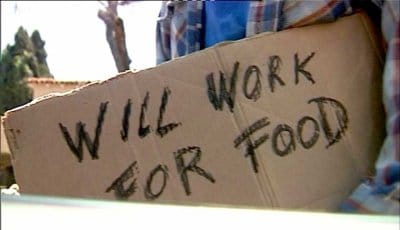
    Will-Work-for-Food
  • Just Another Day at Work…

    Just Another Day at Work…

    Very much a day like no other. Everything started like a normal Monday but a little after 8:00 am we were coming out of our regular Monday morning meeting and heard the fire alarm going off in the building next door. Shortly thereafter we heard rumors of a gunman followed by announcements to take cover.

    Many of us, being Sailors, were looking for ways to help but the right answer was to stay put regardless of what we wanted to do. There was a tremendous police presence the likes of which I’ve never personally seen before.

    I visit the cafeteria in Bldg 197 once or twice on most days. I’m not sure what they will do now because I’m not so sure that people are going to want to sit and socialize there any longer. It will definitely be a tough recovery for all involved.

    Personally, I’m fine. Yesterday was a long day but I eventually made it home. I didn’t witness any violence myself but just knowing that people with whom I work everyday were going through the horrible events that transpired is rough for me. I’ll be fine but my heart truly goes out to the families that lost love ones, to those injured, and to those who witnessed what happened.

    In the days, weeks, and months ahead there will be no limit to the debate. The problem will be attributed to guns in one interview, security posture in another news article, and mental health among many others. From my perspective, the problem will ultimately come down to issues much closer to home and much more personal.

    We cannot let the evil that was made manifest yesterday triumph over all that is good in the world. We can’t stop caring about people and turn this nation into a police state where everyone is treated with an equal level of distrust. Security checkpoints, metal detectors, x-ray machines, and armed security are all great but they are intended to catch people who have already made a decision to do something violent. We need to prevent things like this before they ever get to that level.

    Situations like this and others have never caused me to believe that slamming the door in the face of gentleman entering the building behind me is the right answer. Access badge scanners are great for tracking people but they are not security measures. This man most likely came into the Navy Yard with hate and anger in his heart and it’s likely that badge scanners and security guards were nothing more than minor annoyances as he was planning his attack.

    We all want to find things that can be changed to make us feel more secure and less threatened. That’s okay and perfectly natural but the technology options and brute muscle already mentioned are not what is going to give us the power to feel safe in the world in which we live.

    The world in which I’d like to live offers many a “hello,” “good morning,” “thank you,” and “let me give you a hand.” It’s a world where parents rear children in solid homes with a mom and a dad who love and care about each other. It’s a world where parents hold their children responsible for their own actions so that those same children grow up learning to be responsible citizens in the societies in which we live. Children who learn at home how to give selfless service to those around them are far less likely to fall into the weakness of character that leads to these violent actions.

    It’s entirely possible that the events of yesterday could’ve been stopped years ago by someone who simply thought to be kind to a young man who needed some help and guidance. I didn’t personally know the man who committed this terrible crime but I do know that no one is born evil. We come into this world with talents and abilities intended to be used for good purposes, the Lord’s purposes.

    Daily we are in a battle of good against evil. This battle has been raging on since before we came to this earth and it will certainly continue. Contrary to popular opinion evil will not ultimately triumph. Jesus Christ has already defeated that evil and we must not allow anger and fear to turn us from that which is good and right. We cannot allow our inner light to turn dark as a result of these terrible events.

    As we move forward from here ask yourself what sort of world you’d like to live in. Don’t back yourself into a corner and allow fear and anger to control your thoughts and actions. Don’t be so willing to turn over your rights to the state in the belief that they can make you safer. The state can only make attempts to protect us after parents, home, family, and faith have failed.

    Parents, grandparents, teachers, church leaders, scout leaders, youth group leaders, and others form the front lines in this war. We are all responsible in building up our youth to be strong in choosing things that are right and worthy. With careful and thoughtful leadership and meaningful guidance we’ll see those youth who need a helping hand and hopefully be able to give enough of ourselves to help keep them from ever making these terrible choices as adults.

    I have faith that this can be done. I know however that regardless of our efforts that somewhere in the world the process will fail and terrible things will happen anyway. We do not need to feel defeated by these events. We must instead double our efforts, reach out to those in need, love our neighbors and draw closer as communities. Our strength lies in overcoming the evils of the world and striving for that celestial standard where we all glory together in goodness and righteousness.

  • Federal Employee Benefits Vs. Private Sector

    Federal Employee Benefits Vs. Private Sector

    I must be doing something wrong…

    Last year, I accepted a position working for the Department of Defense. I had to move to a much higher cost-of-living location, accepted a position for essentially lower pay (once you account for differences in cost of living), have to commute 3 hours everyday just to get to & from work, and have to work harder each day while I’m at work just to keep up than I did in my previous position with a private contractor. Truth be told, the benefits package between the two positions was essentially the same.

    Where is this windfall of heavenly pay and benefits I’m supposed to be receiving?  Where are those hours I’m supposed to get to leisurely surf the Internet each day? I’m certainly not going to say that every single day is maximum stress but there are never days where I have the time to just sit & surf for my own entertainment on the government’s dime.

    I understand that federal employment crosses into a wide range of private sector fields of work but, for me and many of the professionals I work with, this “fed-bashing” tends to be rather demoralizing. Most of us are doing the best we can to serve those whom we’ve taken an oath to support. We work everyday to provide the best product we can at the lowest possible cost just as we would do if we were working for a private contractor. Work ethic is tied to character and isn’t dependent upon wear you work.

    I know that in government service, just as in any other large company, there are people who are overpaid and under-worked. I’ve personally seen them both inside and outside of government service.  The biggest problem I see is that we lump all the different sectors of government service into one big whole and make generalizations that just aren’t true. The different governmental agencies operate differently so, if you want to know the truth, compare the agencies against the public sectors they support.  This will give a better snapshot of how pay and benefits compare between private and public employment.

    To my friends who feel that I work too little and get paid too much, I politely say that you’re wrong. To my friends that feel I get too many benefits, I also (politely) say that you’re wrong. To my friends that feel sequestration is a good idea, I vehemently say you’re wrong. Changes need to be made but this is not the right way to do it. Of all the things our government is sworn to provide its citizens, defense is one that was specifically called out by our founding fathers. Weakening our nation’s defense when the world is so unstable is simply wrong. I pray that (soon) wiser heads will prevail.

    Source: Federal Employee Benefits Vs. Private Sector